Plaza de Jerónimo Páez
Written by official guides
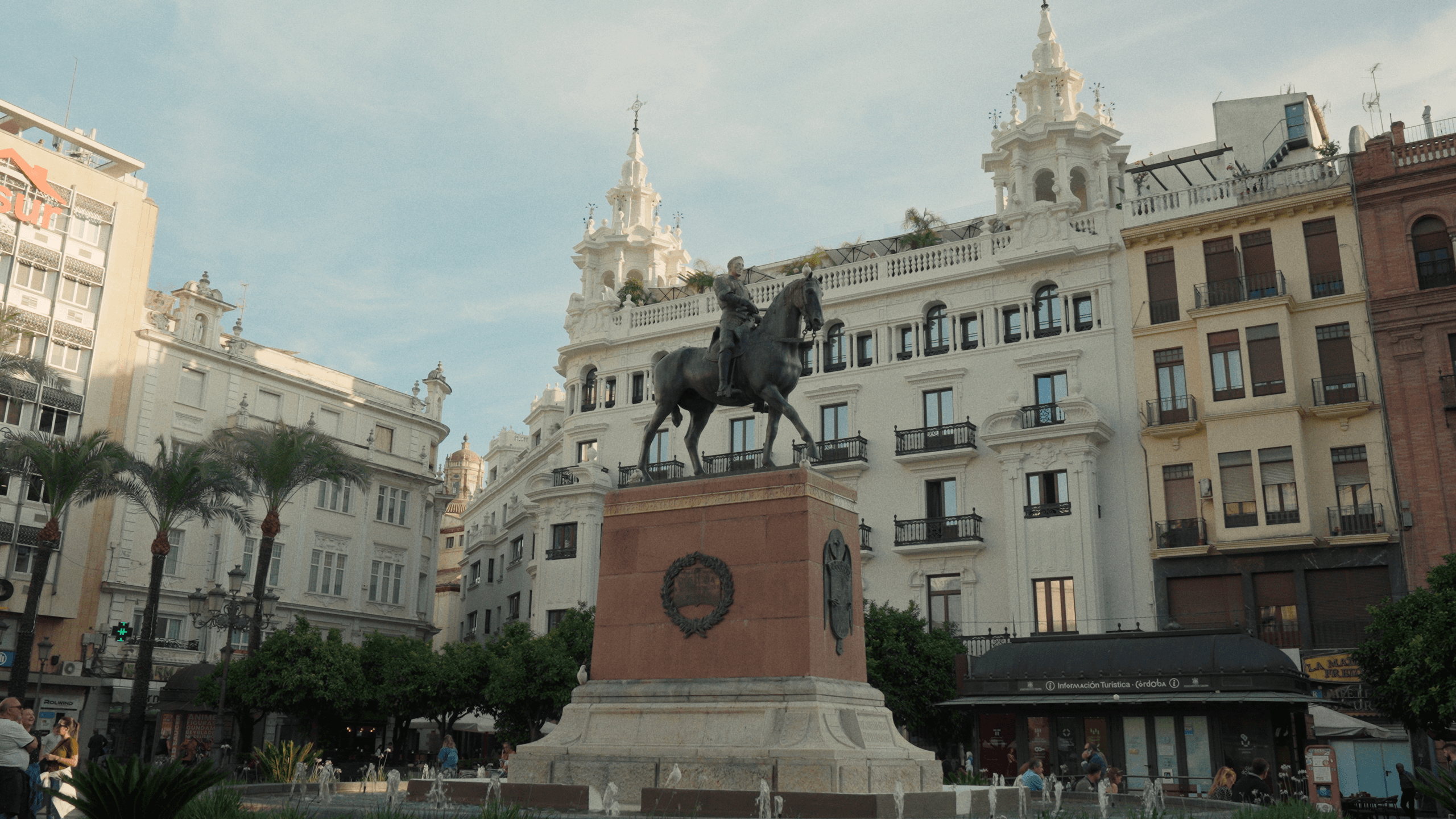
Plaza de Jerónimo Páez is a small square in the historic centre of Córdoba, very close to the Jewish Quarter, which owes its name to the Renaissance palace occupying one of its sides. That same building is today the home of the Archaeological and Ethnological Museum of Córdoba.
This article explains the history of the square and the palace, what to see in the museum it houses, its opening hours and how to get there.
History of Plaza de Jerónimo Páez
The building that gives the square its name is the Palace of the Páez de Castillejo, designed by the architect Hernán Ruiz II in the 16th century. It is one of the outstanding civil works of the Cordoban Renaissance, with a main façade reminiscent of the Puerta del Puente, laid out on two floors around three courtyards.
Beneath the palace itself and the nearby streets lie the remains of the Roman theatre of ancient Colonia Patricia Corduba, the largest in Hispania and the second largest in the whole Roman Empire, with capacity for some 15,000 spectators. It was probably built in the Augustan period, before 5 BC, and an earthquake seriously destroyed it in the 3rd century. The remains were excavated in 1994, when about 30% of the original structure was brought to light.
The Archaeological Museum was permanently installed in the palace in 1959, under the direction of Ana María Vicent Zaragoza, who ran the museum until 1987. In January 2011 a new building of contemporary architecture opened, adjoining the Renaissance palace, which houses in its basement the museum-ised remains of the Roman theatre.
What to see in Plaza de Jerónimo Páez
The square itself is small, but it concentrates three overlapping layers of history: the Roman theatre beneath the ground, the Renaissance palace and the museum that occupies both buildings.
1. The Archaeological and Ethnological Museum of Córdoba
The museum brings together pieces ranging from prehistory to Al-Andalus, spread between the Renaissance building, with three courtyards and eight rooms, and the 2011 extension.
2. The museum-ised Roman theatre
In the basement of the 2011 extension you can visit the Roman theatre, restored and museum-ised, the most singular archaeological piece in the museum.
3. The Palace of the Páez de Castillejo
The palace keeps coffered ceilings, fountains and landscaped courtyards typical of Andalusian stately homes, and its façade is one of the most recognisable of the Renaissance in Córdoba.
Opening hours and price of Plaza de Jerónimo Páez
The square itself is a public space with no opening hours or ticket.
The Archaeological and Ethnological Museum of Córdoba is free for European Union citizens, and 1.50 euros for everyone else. From 16 September to 15 June it opens Tuesday to Saturday from 9:00 to 21:00 and Sundays and public holidays from 9:00 to 15:00, closed on Mondays. From 16 June to 15 September it opens Tuesday to Sunday and public holidays from 9:00 to 15:00, also closed on Mondays, except on the eve of a public holiday.
How to get to Plaza de Jerónimo Páez
The square is less than five minutes' walk from the Mosque-Cathedral, within the network of streets of the Jewish Quarter, so the most practical way to get there is on foot.
As it is a pedestrian area of the historic centre, the nearest car parks are La Mezquita, on Avenida de Doctor Fleming, or Puerta Sevilla.
Plaza de Jerónimo Páez combines well with a stroll through the Jewish Quarter and its nearby streets, such as the Calleja de las Flores. Being free for European Union residents, the Archaeological Museum is an easy stop to fit in mid-morning, before the heat builds in the middle of the day.
Book your guided tour
Want to discover it with an official guide who explains it to you in person?