
Jardines de la Victoria and the Music Kiosk
3 min read
Written by official guides
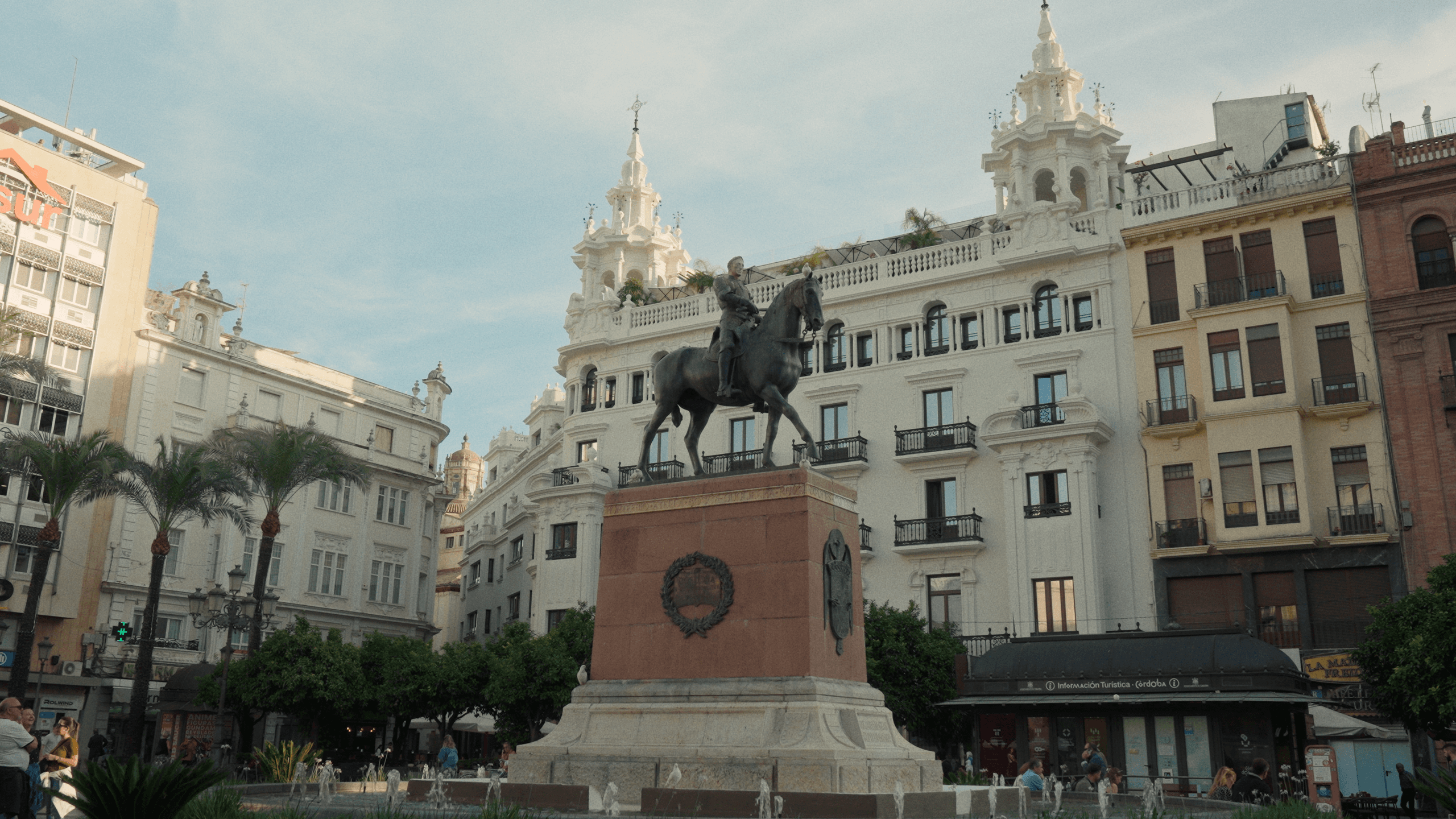
The Jardines de la Victoria are one of the largest green areas in the centre of Córdoba, located between the Paseo de la Victoria and the Avenida de la República Argentina. They are part of the Paseo de la Victoria, one of the city's great tree-lined avenues, and bring together everything from a concert bandstand to two Roman mausoleums.
This article explains the origin of the gardens, their most notable elements and how to get there.
History of the Jardines de la Victoria
The origin of the gardens goes back to 1776, when the magistrate Francisco Carvajal y Mendoza promoted the creation of a spacious landscaped promenade on the outskirts of the historic centre. Their name recalls the former convent of Nuestra Señora de la Victoria, which the City Council bought for demolition in 1865.
In 1854 mayor Francisco de Paula Portocarrero carried out a major reform, with a central area of stone seats with iron backs. Between 1929 and 1930 the neoclassical pergola that today presides over the northern area of the gardens was built, by the architect Carlos Sáenz de Santamaría.
The gardens once hosted the fair of Nuestra Señora de la Salud, held at the end of May, before the fairground moved to El Arenal.
What to see in the Jardines de la Victoria
The gardens bring together several elements worth looking for during your stroll, from archaeological remains to a gastronomic market.
1. The Music Kiosk
The Music Kiosk is a bandstand for popular concerts, remodelled in a project completed in March 2007 to recover its cultural use, next to what was the Círculo de la Amistad's marquee during the Córdoba Fair.
2. The Roman mausoleums
Next to the gardens, on the route of the ancient Via Augusta and opposite what was the Puerta de Gallegos, two Roman mausoleums with a cylindrical plan survive, each 13 metres in diameter. The northern one was built during the reign of the emperor Tiberius (14-37 AD). The remains were discovered in 1993 and, since September 2024, can be visited with a guide under an agreement between the City Council and a private company.
3. The Mercado Victoria
The building now occupied by the Mercado Victoria was originally the iron pavilion of the Círculo de la Amistad, from 1877, extended in 1918 with a pseudo-Mudejar section by Adolfo Castiñeyra. Its conversion into a gastronomic market began in April 2004, with a budget of 627,120 euros for the first phase.
4. The Modernist fountain and the pergola
The gardens' Modernist fountain, in grey marble, was built in the first decade of the 20th century, with an amphora-shaped pedestal and figures of atlantes. Behind it, the 1929-1930 neoclassical pergola now houses a restaurant.
Opening hours of the Jardines de la Victoria
The Jardines de la Victoria are free and open access, with no closing time or ticket. The Mercado Victoria and the area's bars and restaurants do, however, have their own opening hours.
How to get to the Jardines de la Victoria
On foot, the gardens are a little over ten minutes from Plaza de las Tendillas, following Avenida del Gran Capitán until it joins the Paseo de la Victoria.
By car, the underground car park on Avenida de la Libertad is the closest option.
The gardens combine well with lunch or dinner at the Mercado Victoria, and with a later stroll to the Jardines de Vallellano, which extend the Paseo de la Victoria down to the Guadalquivir. The area around the Music Kiosk and the pergola is especially pleasant at dusk, when temperatures drop.
Book your guided tour
Want to discover it with an official guide who explains it to you in person?