
Palacio de Viana in Córdoba
Written by official guides
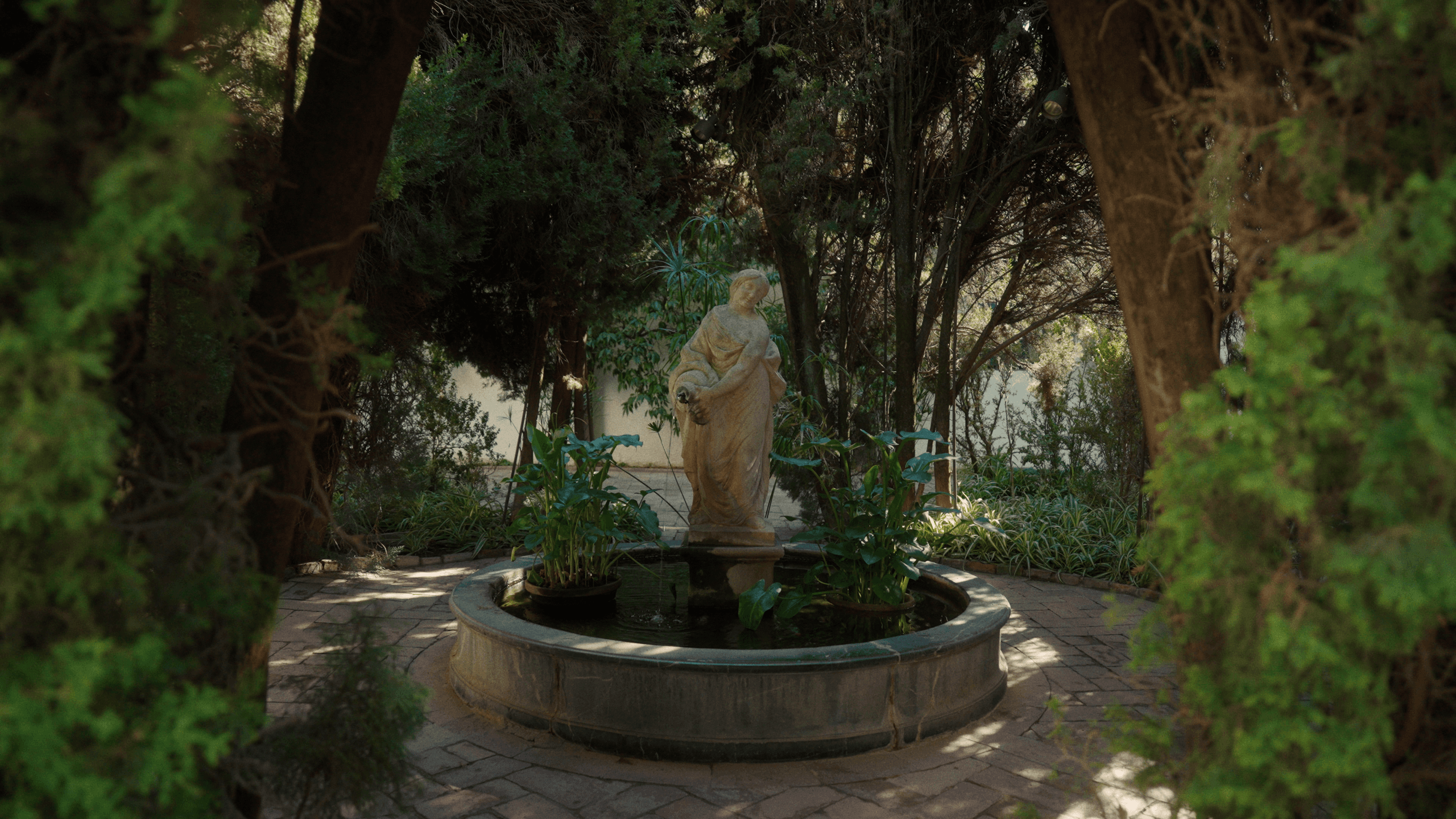
The Palacio de Viana, listed as an Asset of Cultural Interest in 1981, is one of the best-preserved stately homes in Spain and brings together more than 600 years of history. It is in the Axerquía, a few metres from the Church of Santa Marina and San Agustín, in an area that still keeps the feel of a Cordoban neighbourhood with courtyards and historic houses.
In this guide you will find the essentials for organising your visit clearly, opening hours and tickets, and what is really worth seeing inside according to the monument's own route: the 12 courtyards, the 1,200-square-metre garden, the stables, the state rooms and the interior of the palace with a guided visit.
The stately home of the Axerquía, visited courtyard by courtyard
The Palacio de Viana is best understood as a stately home that has survived to this day with its way of life intact, and you notice it from the first step. It is in the Axerquía, near the Church of Santa Marina and San Agustín, and it is not visited like a façade palace, but as a complex that opens up from within.
Here the visit goes from courtyard to courtyard. The 12 courtyards are the thread running through it, connected to each other, and take you through more than 2,000 square metres of open spaces of different periods and styles, where the vegetation changes with the time of year.
History of the Palacio de Viana in Córdoba and how it grew from 1425
The history of the Palacio de Viana begins in 1425, when Ruy Fernández bought a group of manor houses for some 750 gold doubloons, which over time were extended through new acquisitions of spaces, land and properties by his descendants and relatives.
Over the centuries the complex passed through different hands, among them the Villaseca family and the Marquises of Viana for a little over a century. The big change came in 1980, when the Caja Provincial de Ahorros de Córdoba bought the palace and, shortly afterwards, it officially opened to the public in November 1981.
The 5 must-sees in the Palacio de Viana
The 12 courtyards of the Palacio de Viana
The 12 courtyards, connected to each other, are one of the palace's great attractions. In their more than 2,000 square metres you will find courtyards of different periods and styles, such as the Patio de Recibo (Reception Courtyard), the Patio de los Gatos (Cats' Courtyard), the Patio de los Naranjos (Orange Tree Courtyard), the Patio de las Columnas (Courtyard of the Columns) or the Patio de la Capilla (Chapel Courtyard), among others. All of them have very varied vegetation, which changes with the season in which you visit.
The 1,200-square-metre garden
Added to the palace in the 19th century, at the wish of Diego Rafael Cabrera Fernández de Mesa, the house was extended to include a garden following the French-inspired fashion of the time. It has a maze of paths, 16 box-hedge parterres, a stone fountain in the centre and a great variety of plants, among which orange trees, palms, lemon trees and a century-old Portuguese oak almost 25 metres high stand out.
The stables
Restored and opened to the public in 2019, they are one of the last areas recovered for visitors. They have three naves separated by arches and Tuscan columns, and you can see outstanding pieces such as a palanquin, a 16th-century saddle and a 19th-century seven-horse wedding carriage, as well as horse tack and coachmen's uniforms.
The state rooms
On the lower floor of the Palacio de Viana, reached from the courtyards and the garden, is a space intended to display the family's power and status, designed for the important visitors who once met with them. Highlights include a 4th-century AD Roman mosaic found at the Palacio de la Moratalla, and rooms such as the Signing Room, the Hall of the Display Cabinets, which holds a collection of Asian tableware from the East India Company, and the Tobias Hall, with murals depicting Saint Raphael.
Interior of the palace
The interior shows a stately home inhabited from the 15th century to the second half of the 20th century, preserving the original furniture, the rooms used by its former inhabitants and art collections such as tapestries, paintings, tiles and leatherwork. They are objects of great value and a glimpse of the daily life of the marquises who lived in the palace, gathered between 1870 and 1927 by José Saavedra y Salamanca, second Marquis of Viana.
Palacio de Viana opening hours
From September to June, the Palacio de Viana opens Tuesday to Saturday from 10:00 to 19:00 and Sundays and public holidays from 10:00 to 15:00. It is closed on Mondays.
In July and August, the hours change to Tuesday to Sunday from 9:00 to 15:00, also closed on Mondays.
Palacio de Viana tickets: prices and where to buy
To visit the Palacio de Viana there are several options depending on what you want to see.
The self-guided ticket includes the 12 courtyards, the garden and the state rooms on the lower floor. It costs €8.50. It is free for people with a disability of 33% or more and for children aged 10 or under.
If you prefer to see the interior with a guide in Spanish, with written translation in English and French, the ticket costs €9.00. For people with a disability of 33% or more it is €7.00, and for children aged 10 or under it is free.
There is also a combined interior + courtyards ticket, costing €14.00. For people with a disability of 33% or more it is €7.00, and for children aged 10 or under it is free.
Tickets can be bought on the monument's official website and also at the Palacio de Viana reception, through the main entrance.
There is also a guided visit to the Palacio de Viana with us, priced at €33 for adults, €15 for children aged 6 to 10 and €0 for under-6s.
Guided visit to the Palacio de Viana
If you would like a guided visit to the Palacio de Viana, with us the price is €33 for adults, €15 for children aged 6 to 10 and €0 for under-6s. It lasts approximately an hour and a half.
The visit is led by an official tourist guide, covering the courtyards, garden, state rooms and stables, and the interior is visited with the Palacio de Viana's own guide.
If what you are looking for is a plan focused on the popular Cordoban courtyards, you can choose the guided visit to the Patios of Córdoba.
How to get to the Palacio de Viana
The Palacio de Viana is at Plaza de Don Gome, 2, in the Centro area of Córdoba. It is easy to identify by the façade with the family's coat of arms and the large entrance gate.
The usual way to get there is on foot from the centre or any point in the historic centre. As traffic is restricted in the area, if you come by car it is best to leave it in nearby car parks and walk the last stretch.
If you use public transport, the closest lines to the palace are 1, 2, 4 or 6.
If you want to get to know it with more context, the best way is to book a guided visit to the Palacio de Viana with an official guide.
Book your guided tour
Want to discover it with an official guide who explains it to you in person?