THE PATIOS OF CÓRDOBA
Written by official guides
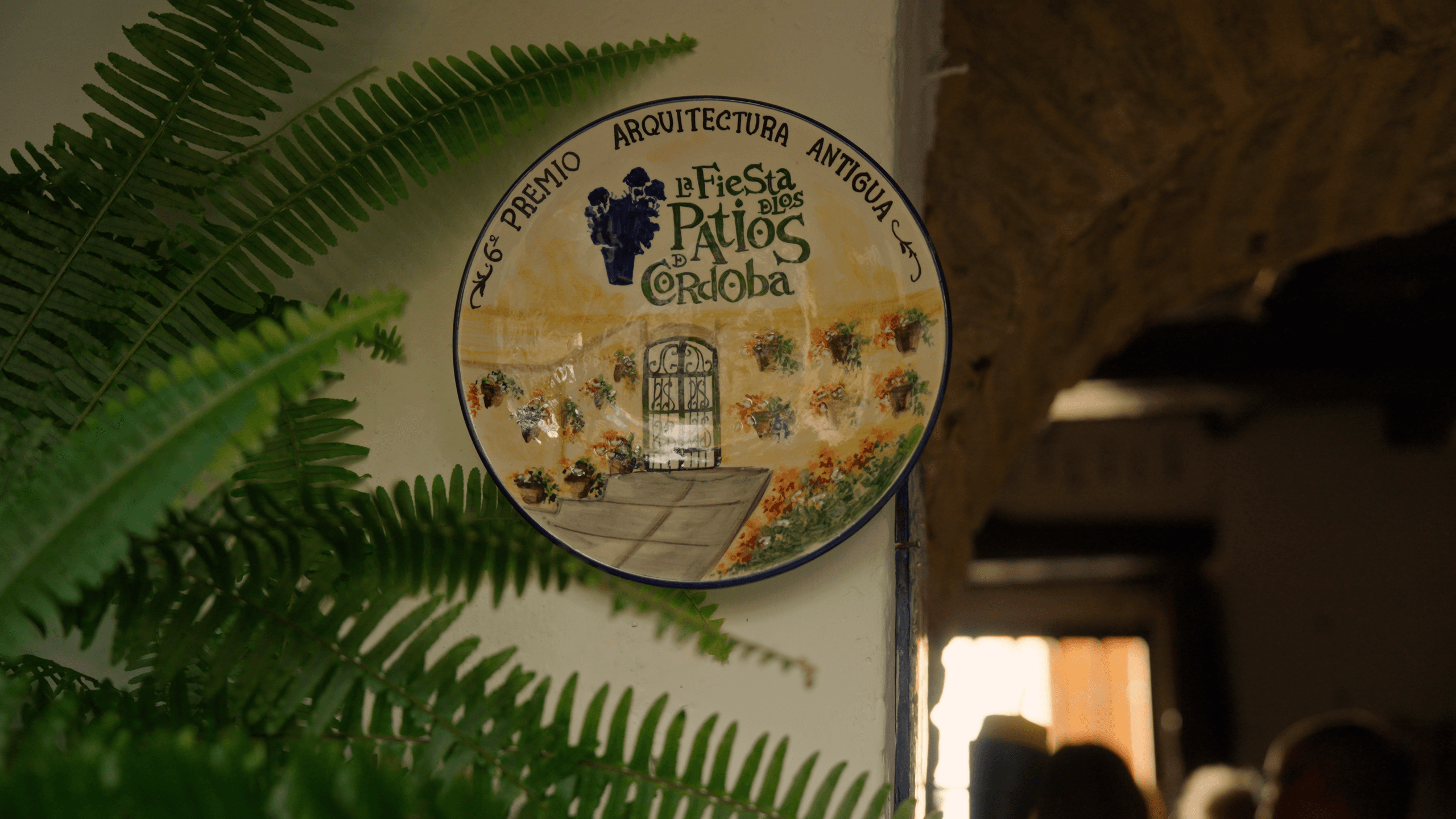
In the historic centre of Córdoba, the patios of Córdoba are spread across several districts and can be visited in two ways. During the Patios Festival, in the first two weeks of May, around 50 competing patios open to the public and about 10 more non-competing ones can also be visited, organised into five routes to explore them in order: Santa Marina–San Agustín, San Lorenzo, San Pedro–Santiago, Judería–San Francisco and San Basilio.
The rest of the year, visits focus on San Basilio, what many Cordobans call the Alcázar Viejo district, where five patios can be visited. The visitable patios are easy to recognise when you arrive: two potted shrubs flank the door of the entrance hall and, once through it, the patio opens up as the heart of the house.
This tradition comes from the most characteristic type of dwelling in Córdoba until the 1970s, with a central courtyard around which the rooms were arranged and where household tasks were done at the washing places, kitchens, toilets and the well, always with pots, water and greenery as part of neighbourhood life. The festival of patios, railings and balconies began in 1921, and in 2012 it was declared World Heritage by UNESCO.
HISTORY OF THE PATIOS OF CÓRDOBA: TRADITIONAL HOUSING AND A FESTIVAL SINCE 1921
Patios were the basis of traditional housing in Córdoba from the industrial era until the 1970s. The house was organised around a central courtyard and daily life was concentrated in that space: washing places, kitchen, toilets and the well, plus pots and plants as part of neighbourly coexistence.
From that way of life came, in 1921, the festival of patios, railings and balconies, a celebration with more than a century of history that in 2012 was declared World Heritage by UNESCO.
WHERE TO SEE PATIOS ALL YEAR ROUND IN CÓRDOBA: SAN BASILIO, THE ALCÁZAR VIEJO
Outside the festival, the most direct way to see patios of Córdoba at any time of year is to go to the San Basilio district, the Alcázar Viejo, where 5 patios can be visited. You enter through the entrance hall of each house and, at the back, the patio opens up with its pots and greenery, just as the Cordoban patio is understood all year round.
The visitable patios are easy to recognise on arrival by the two potted shrubs flanking the front door. Entry to these patios (outside the competition) costs €6.50 and there is also the option of guided visits, both during and outside the competition. As for accessibility, most are adapted with ramps to get over occasional steps.
THE 5 SAN BASILIO PATIOS VISITABLE ALL YEAR
Outside the festival, the patios can be visited in the San Basilio district, also known as Alcázar Viejo, where there are 5 visitable patios. You will recognise them because the entrance doors usually have two potted shrubs on either side and, beyond the entrance hall, the patio opens up.
PATIOS OF CÓRDOBA FESTIVAL: WHEN IT IS, OPENING HOURS AND ENTRY
During the festival, usually held in the first two weeks of May, the patios are spread across the whole historic centre. Around 50 patios compete and about 10 more non-competing ones can be visited, organised into 5 routes to explore them in order.
On those dates, they can usually be visited every day from 10:00 to 14:00 and from 18:00 to 22:00. The non-competing San Basilio patios usually open from 11:00 to 14:00 and from 17:00 to 20:00.
Entry to the festival is free. Outside the competition, the visitable patios of the San Basilio district cost €6.50 and there is also the option of guided visits, both during and outside the competition.
Before going, it is worth checking the official patios tourism website for updated opening hours. As for accessibility, the vast majority can be visited because ramps are placed on steps where needed.
PATIOS OF CÓRDOBA ROUTE BY DISTRICT
During the festival, the patios of Córdoba are spread across the whole historic centre so that the visit is orderly. Around 50 patios compete and about 10 more non-competing ones usually open, distributed in five routes: Santa Marina – San Agustín, San Lorenzo, San Pedro – Santiago, Judería – San Francisco and San Basilio.
Outside those dates, visits focus mainly on San Basilio, the district many Cordobans call Alcázar Viejo, where 5 patios can be visited for the rest of the year.
If you want to explore them with explanations, you can do so with our guided visit to the Patios of Córdoba, available both during and outside the competition.
Book your guided tour
Want to discover it with an official guide who explains it to you in person?