Archaeological Museum of Córdoba
Written by official guides
The Archaeological and Ethnological Museum of Córdoba occupies the Palace of the Páez de Castillejo, in the heart of the city's historic centre, and brings together in its rooms the complete story of Córdoba from Prehistory to Al-Andalus. Beneath the building itself also lies the Roman theatre of Corduba, one of the largest found to date in Hispania.
It is a stop that combines unique pieces, such as the Crouching Aphrodite or the Iberian Lion of Nueva Carteya, with an archaeological site that can be visited in situ, something rare in a museum of this size. Below we explain which rooms to prioritise if you are short of time, how much the ticket costs and how to get there from the Mosque area.
History of the Archaeological Museum of Córdoba
The Archaeological and Ethnological Museum of Córdoba occupies the Palace of the Páez de Castillejo, in Plaza de Jerónimo Páez, a 16th-century building attributed to Hernán Ruiz II and considered the oldest surviving Renaissance civil building in the city. The State acquired the palace in 1943 to house the Cordoban archaeological collection, and the museum opened there in 1959, with the floor devoted to Prehistory and the Visigothic period inaugurated in 1961 and the Al-Andalus floor in 1962.
The palace and the site beneath its floor are among the stops we cover with groups on our guided route through the historic centre, together with other points of the monumental area such as the Baths of the Caliphal Alcázar.
In 1994, during extension works on the building, the Roman theatre of Corduba was discovered, whose existence had until then been known only from 19th-century epigraphic sources. The following year it was established that its cavea reached a maximum diameter of 124.3 metres, making it the largest Roman theatre found in Hispania, although to date only around 30% of its area has been excavated. The museum's new building, inaugurated on 31 January 2011, was built integrating these remains into its basement, where visitors now walk on walkways.
What to see in the Archaeological Museum: the must-see rooms
The museum has eight rooms, four courtyards and a gallery, and seeing it all takes well over an hour. We have picked four stops that cover the essentials in 45 to 60 minutes, the real time our groups spend on this part of the visit.
1. Prehistory and protohistory of Córdoba
Room I brings together pieces from the Lower Palaeolithic to the Bronze Age, while Room II covers material from the end of the second millennium BC to the 2nd century BC, in the full Iberian period. Among the pieces from this stage the Iberian Lion from Nueva Carteya stands out, one of the museum's best-known zoomorphic sculptures.
2. Roman Corduba: the city beneath the city
Rooms III, IV and V are devoted to the Roman period, when Corduba was capital of Baetica and one of the most important cities in Hispania. Here the Crouching Aphrodite is displayed, a Roman replica in Parian marble of a Greek original attributed to Doidalses of Bithynia, dated to the Antonine period (138-192 AD) and the only copy of this type found in the whole peninsula, with only five others known in the world.
The sculptural group of Mithras from Cabra is also kept here, from the Roman villa of El Mitreo, in Cabra, and dated to the 2nd century AD.
3. The Roman theatre visible beneath the museum itself
The Roman theatre site described in the history section is visited as part of the route through the rooms, via walkways that go down to the basement of the 2011 building. It is the only point in the museum where you literally walk over the original remains, and gives a real idea of the size of a 1st-century AD entertainment building in Corduba.
4. Al-Andalus: from caliphate to taifa
Before reaching the Islamic rooms, Room VI brings together the most complete collection of Visigothic art in the city, together with that of the San Vicente Museum in the Cathedral. Rooms VII and VIII close the route with Al-Andalus: Room VII is devoted exclusively to the finds from Medina Azahara, and Room VIII gathers pieces worked in metal, mainly bronze, from the caliphal and taifa periods.
Opening hours and ticket price
Before looking at opening hours: entry to the Archaeological Museum of Córdoba is free for European Union residents. For all other visitors, the general ticket costs 1.50 euros.
From 16 September to 15 June, the museum opens Tuesday to Saturday from 9:00 to 21:00, and Sundays and public holidays from 9:00 to 15:00. From 16 June to 15 September, hours change to Tuesday to Sunday from 9:00 to 15:00. The museum is closed on Mondays, except on the eve of a public holiday.
The entrance is at Plaza de Jerónimo Páez, 7, and the information telephone is 957 355 517.
How to get to the Archaeological Museum from the centre
The museum is in the heart of the historic centre, very close to the Mosque-Cathedral, within the same area declared a World Heritage Site, and it is a short walk through the streets of the Jewish Quarter.
Those who prefer not to walk can take city bus line 3, with a stop near Plaza de Jerónimo Páez.
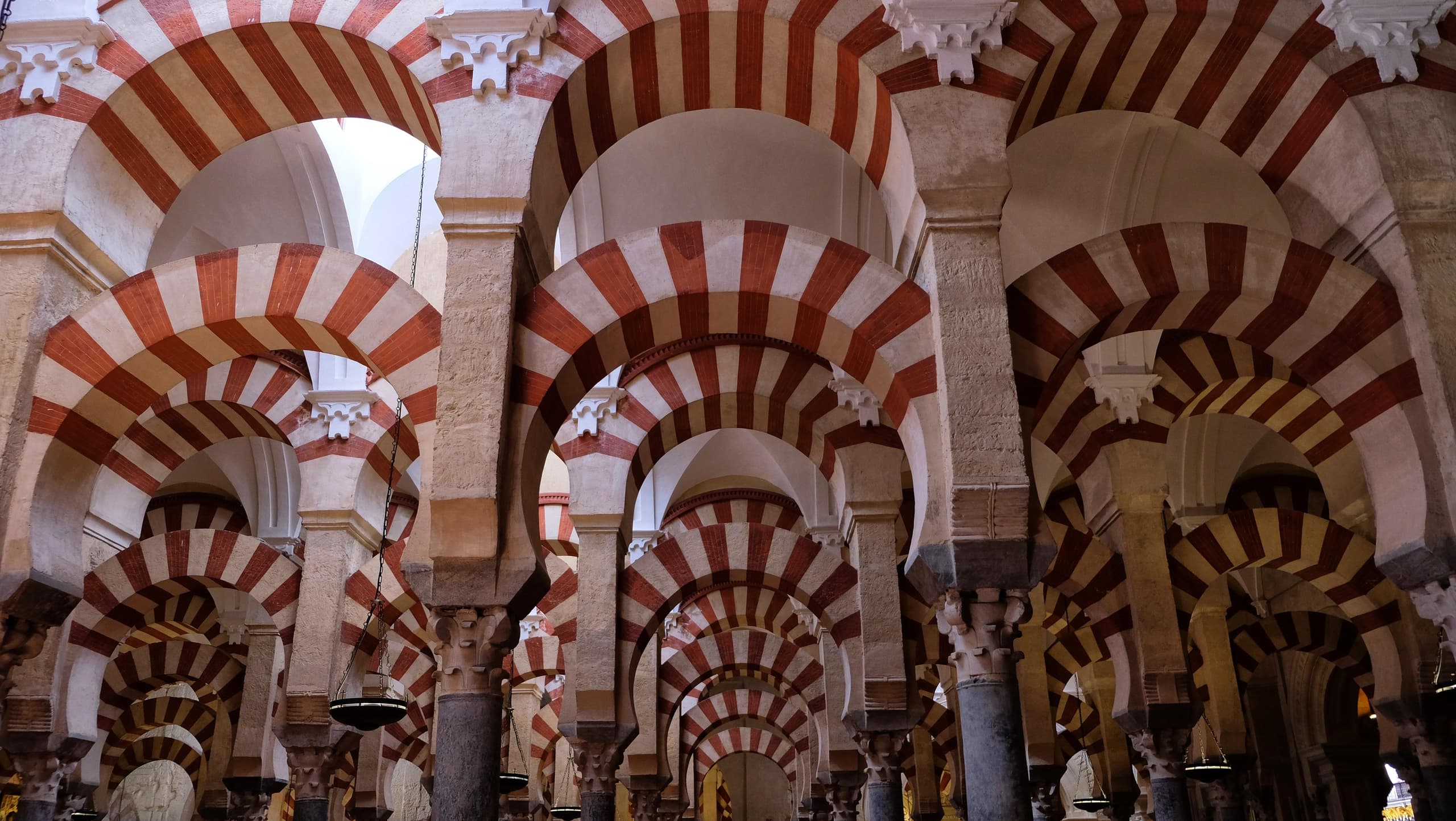
Right next door is the Mosque-Cathedral, the piece that gives meaning to much of what is seen in the museum's rooms. Our guided visit to the Mosque of Córdoba in Spanish lasts 1 hour and 15 minutes, includes the ticket and costs 28 euros per person; there is also a small-group option, with a maximum of 12 people, for 36 euros.
Book your place and complete in a single morning the story that begins in the rooms of the Archaeological Museum and continues among the columns of the Mosque.
Book your guided tour
Want to discover it with an official guide who explains it to you in person?