
San Lorenzo district
5 min read
Written by official guides
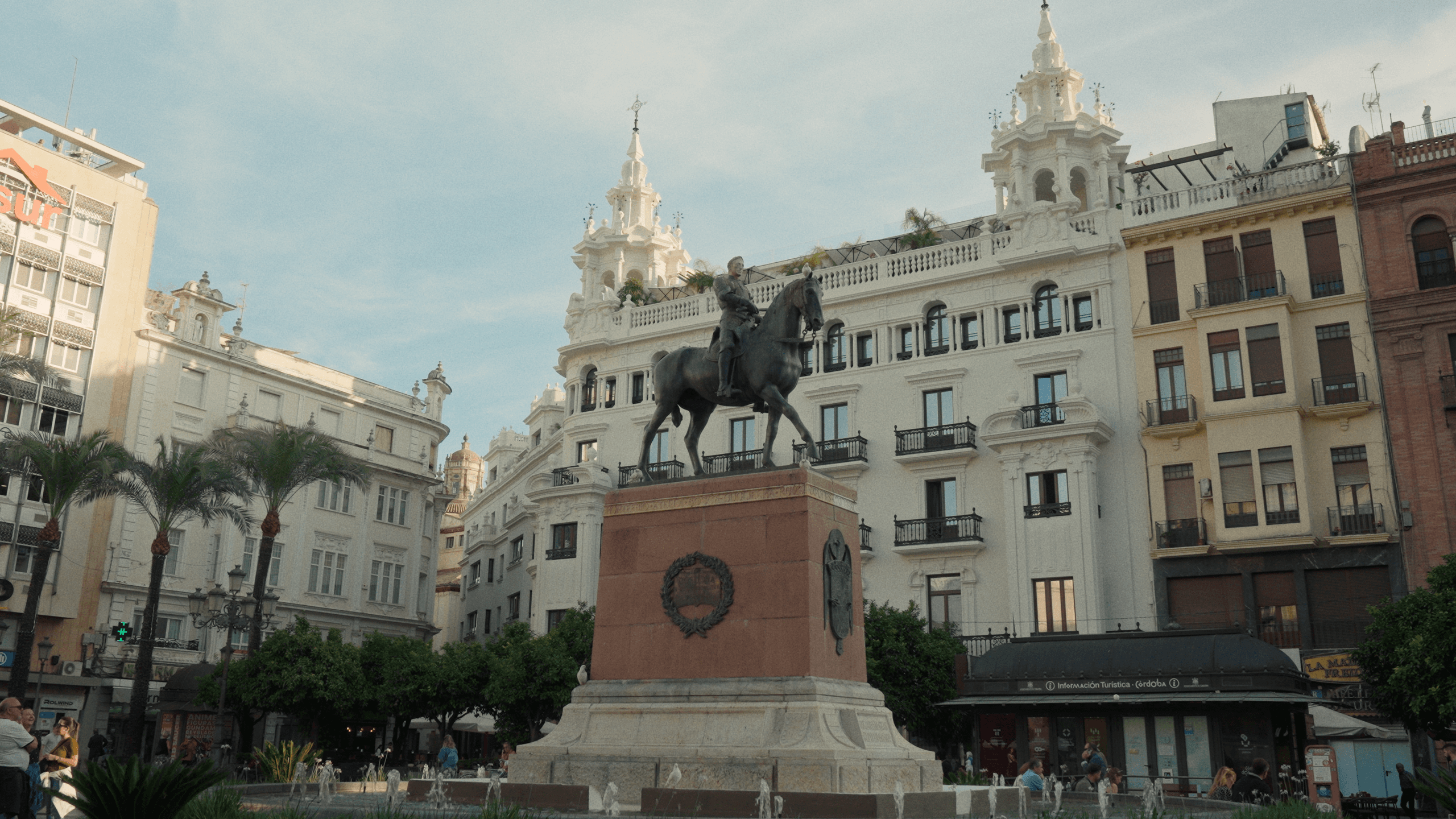
San Lorenzo is one of the neighbourhoods in the Centro district of Cordoba, set in the old Axerquía, the outer-walls area that the Islamic city extended to the east of the original core. Its present-day limits are marked by streets such as Obispo López Criado, Cárcamo, Avenida de Ollerías, Ronda del Marrubial, María Auxiliadora, Escañuela, Custodio and Pozanco, a perimeter that still recalls the line of the wall that protected this side of the medieval city.
It stands out for its origin as a Fernandine parish and for the almost unbroken continuity of that name from the 13th century to today, along with a strongly neighbourly and artisan character that survives in its narrow streets, its flower-filled courtyards and its everyday life, far from the bustle of the busiest routes of Cordoba's monumental centre.
History of San Lorenzo
San Lorenzo came into being as a parish after the Christian conquest of Cordoba, when Ferdinand III reorganised the interior of the walled city in 1236 into fourteen parishes, seven in the Villa and seven in the Axerquía. San Lorenzo is one of the latter and takes its name from its parish church, one of the Fernandine churches built on the site of a former mosque. Unlike other medieval parishes that changed their name or disappeared over time, San Lorenzo has kept its original name ever since.
The 1536 census, studied by the historian Josefa Leva Cuevas, reveals a more varied population than is usually assumed: alongside farm labourers lived owners of wine presses and orchards, artisans and professionals. That year the neighbourhood supplied 18 caballeros de premia to the town militia, more than San Andrés (15) or La Magdalena (7), a sign of a community with its own economic weight. Along these same streets, between 1474 and 1477, lived a young Gonzalo Fernández de Córdoba, the future Great Captain, held under conditional release in the houses of the Ruiz de Cárdenas family during the noble struggles of the reign of Henry IV.
The 17th century brought decline: the disappearance of the caballeros de premia class and the economic crisis of the Spanish empire hit a neighbourhood that also suffered heavily from the plague outbreaks of the mid-century. San Lorenzo gradually lost ground to the commercial centre of the city, but it kept its web of narrow streets, its courtyards and its character as a working-class neighbourhood, a trait that still defines its identity within the Centro district today.
What to see in San Lorenzo
San Lorenzo is best explored on foot, unhurried, among streets that keep much of their medieval layout. These are some of its most representative spots.
1. Plaza and church of San Lorenzo
The Plaza de San Lorenzo, with its fountain, is the natural starting point for any walk around the neighbourhood. It is presided over by the Church of San Lorenzo, one of the Fernandine churches that Ferdinand III had built after the reconquest of 1236, with its distinctive Gothic rose window and its tower raised over a former minaret. Even without going inside the church, which deserves a separate visit, the square itself and the whitewashed lanes around it already sum up the atmosphere of the neighbourhood well.
2. Church of the Juramento de San Rafael
In the Plaza de San Rafael stands the Church of the Juramento de San Rafael, built between 1796 and 1806 by the architect Vicente López Cardera, with what is considered the last neoclassical façade erected in Cordoba. The church marks the place where, according to tradition, the archangel Raphael appeared to the priest Andrés de las Roelas on 7 May 1578 and swore to protect the city, an episode that gave rise to Cordoba's devotion to the guardian archangel.
3. Taberna de la Sociedad de Plateros
On Calle María Auxiliadora, the former main street of San Lorenzo, the Sociedad de Plateros opened its central cellar and tavern at number 159 in 1925. This mutual association of Cordoban silversmiths, considered the oldest mutual aid society in Spain, has maintained a tavern tradition since the late 19th century that turned the premises into a meeting point for conversation and neighbourhood life, and it still operates today as one of the city's historic taverns.
4. Jardín de los Poetas and the Marrubial walls
Next to the Ronda del Marrubial, on the former orchard of the Trinitarians, the city council opened the Jardín de los Poetas in 1992, designed by the municipal architect Juan Serrano Muñoz with water as the axis of the layout. The garden rests against a preserved stretch of the Almohad wall that closed off the Axerquía on its eastern side, one of the few visible remains of the defensive belt that protected this neighbourhood during the Middle Ages.
5. The courtyards of San Lorenzo and the Patios Festival Interpretation Centre
Every May, San Lorenzo takes part in Cordoba's Patios Festival, declared Intangible Cultural Heritage of Humanity by UNESCO in 2012. On Calle Trueque, the Patio del Trueque has become the home of the Patios Festival Interpretation Centre, where a traditional courtyard with a well, Cordoban paving and a century-old jasmine can be visited all year round, and where you can learn about the origins of a festival that fills the neighbourhood's streets with flowerpots every spring.
How to get to San Lorenzo
San Lorenzo is a short walk from the centre of Cordoba. From Plaza de las Tendillas the walk to Plaza de San Lorenzo takes only a few minutes; from the Mosque-Cathedral, crossing the old town through San Andrés and Santa Marina, the walk is around 20 minutes. By city bus, Aucorsa line 1 connects the neighbourhood directly, with its own stop called San Lorenzo, to Claudio Marcelo-Tendillas, running along the Ronda del Marrubial, one of the neighbourhood's historic boundaries.
San Lorenzo is best explored unhurried, letting yourself be led by its narrow streets and flower-filled courtyards. It is a neighbourhood for walking, for stepping into its century-old tavern and discovering, far from the busiest routes of the monumental centre, how it remains today what it has been since the 13th century: a neighbourhood of working people that has managed to keep its identity.
Book your guided tour
Want to discover it with an official guide who explains it to you in person?