
Santa Marina district
3 min read
Written by official guides
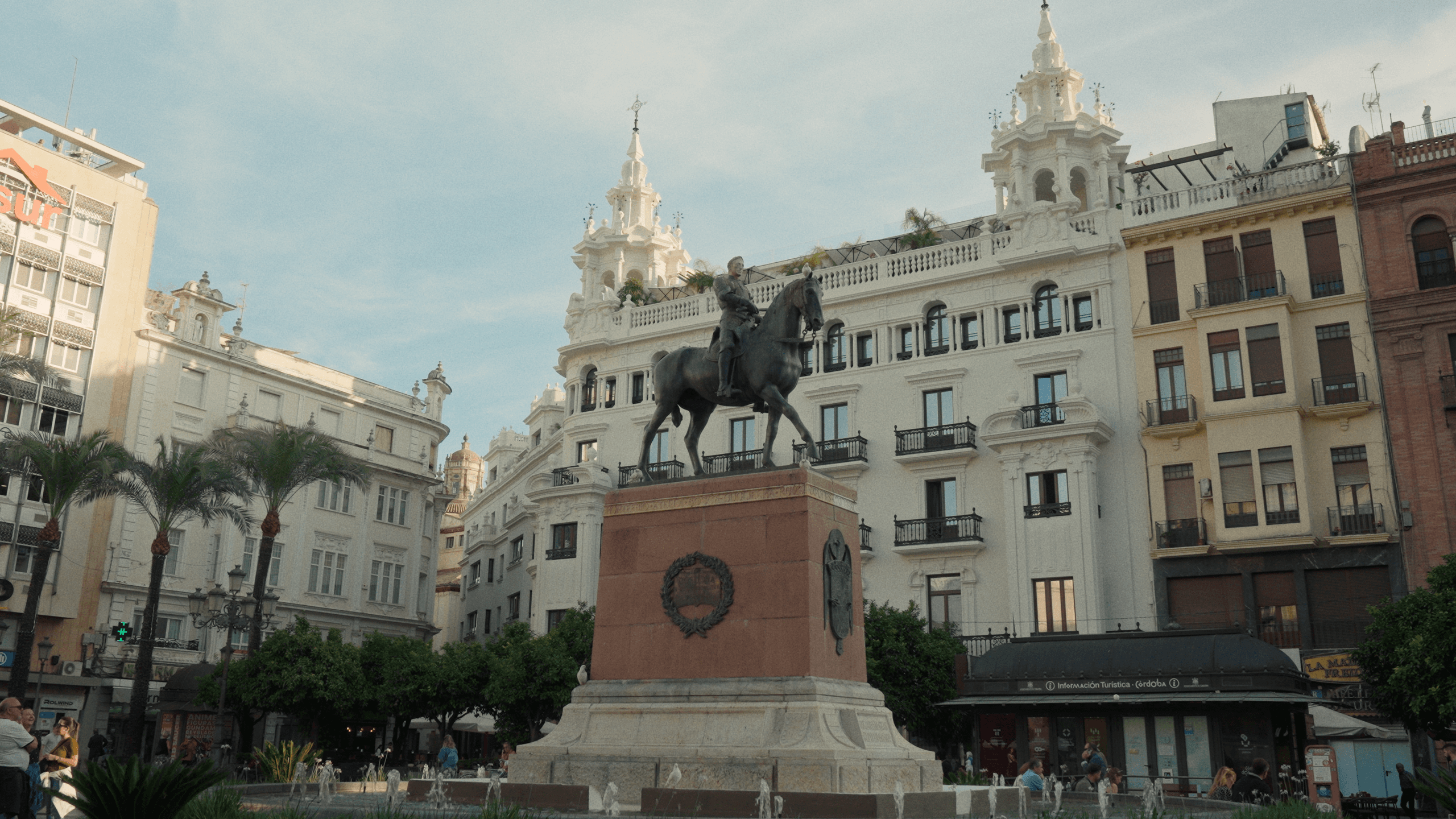
The Santa Marina district occupies the northern sector of the Axerquía, the old lower town of Córdoba, and takes its name from the Fernandine church of Santa Marina de Aguas Santas, consecrated in 1241 by the first bishop of the diocese, Lope de Fitero. It is, by area and population, one of the largest neighbourhoods in the historic centre, and its central square, Plaza del Conde de Priego, concentrates much of the life of the community.
It is popularly known as the bullfighters' neighbourhood. Here, on 4 July 1917, Manuel Rodríguez Sánchez 'Manolete' was born, the fourth of the five Caliphs of Cordoban Bullfighting, and his memory still marks the character of the neighbourhood as much as its courtyard-house architecture.
History of Santa Marina
The church of Santa Marina was built after the Christian conquest of 1236 and by 1256 there are already documentary references to it, making it the oldest of the Fernandine churches together with Santa María Magdalena. A fire seriously damaged it on 23 June 1880 and forced a two-year reconstruction; worship was not restored until 17 July 1882. It has been listed as a historic-artistic monument since 1931.
The neighbourhood keeps the memory of hard times: between May and November 1786, an epidemic of intermittent fevers caused 1,214 deaths and 11,657 cases across the whole city, and Santa Marina was, together with San Lorenzo, one of the hardest-hit neighbourhoods, with 111 recorded deaths. A few years later, between 1789 and 1790, the City Council invested 46,000 reales, plus an additional 3,000, in drainage and paving works to channel the streams that flooded its streets every time it rained.
The Puerta del Colodro, now vanished, marked one of the entrances to the neighbourhood; according to tradition it was scaled by the almogavar Álvar Colodro during the conquest of January 1236. On its north-eastern edge, the Malmuerta Tower, built between 1406 and 1408, separated Santa Marina from the rest of the Axerquía.
What to see in Santa Marina
The neighbourhood is easily explored on a short walk that starts in its main square and then heads into its quieter streets.
1. Plaza del Conde de Priego and the church of Santa Marina
The square brings together the façade of the Fernandine church, with its three naves and its tower by Hernán Ruiz the Younger, and the monument to Manolete, a work by the sculptor Manuel Álvarez Laviada inaugurated on 8 May 1956. It is the natural starting point for exploring the neighbourhood.
2. Calle Mayor de Santa Marina
Formerly called Calle Ancha, it is the main artery of the neighbourhood: it starts next to the church and extends towards what was once open countryside. It concentrates much of the local shopping and of the courtyard houses that still open in spring.
3. Malmuerta Tower
On the edge of the neighbourhood with the rest of the Axerquía, this early 15th-century defensive tower also served as a prison for nobles and, centuries later, as an astronomical observatory. Its name recalls the legend of a woman buried there after being unjustly murdered by her husband.
4. Plazuela de la Lagunilla
One of the most secluded corners of the neighbourhood, with running water all year round thanks to an old system of Arab wells connected by an underground channel. A good contrast with the bustle of Plaza del Conde de Priego.
How to get to Santa Marina
From the Mosque-Cathedral, Santa Marina is about twelve minutes' walk via Plaza de la Corredera. By bus, Aucorsa's circular line C2 stops right in front of the Church of Santa Marina.
Spring and autumn are the best times to stroll around Santa Marina, when the heat is not oppressive and the courtyard houses open their doors. The neighbourhood combines well with a visit to the nearby Palacio de Viana, Plaza de la Corredera or the neighbouring districts of San Lorenzo and San Agustín.
Book your guided tour
Want to discover it with an official guide who explains it to you in person?