
Santiago district
4 min read
Written by official guides
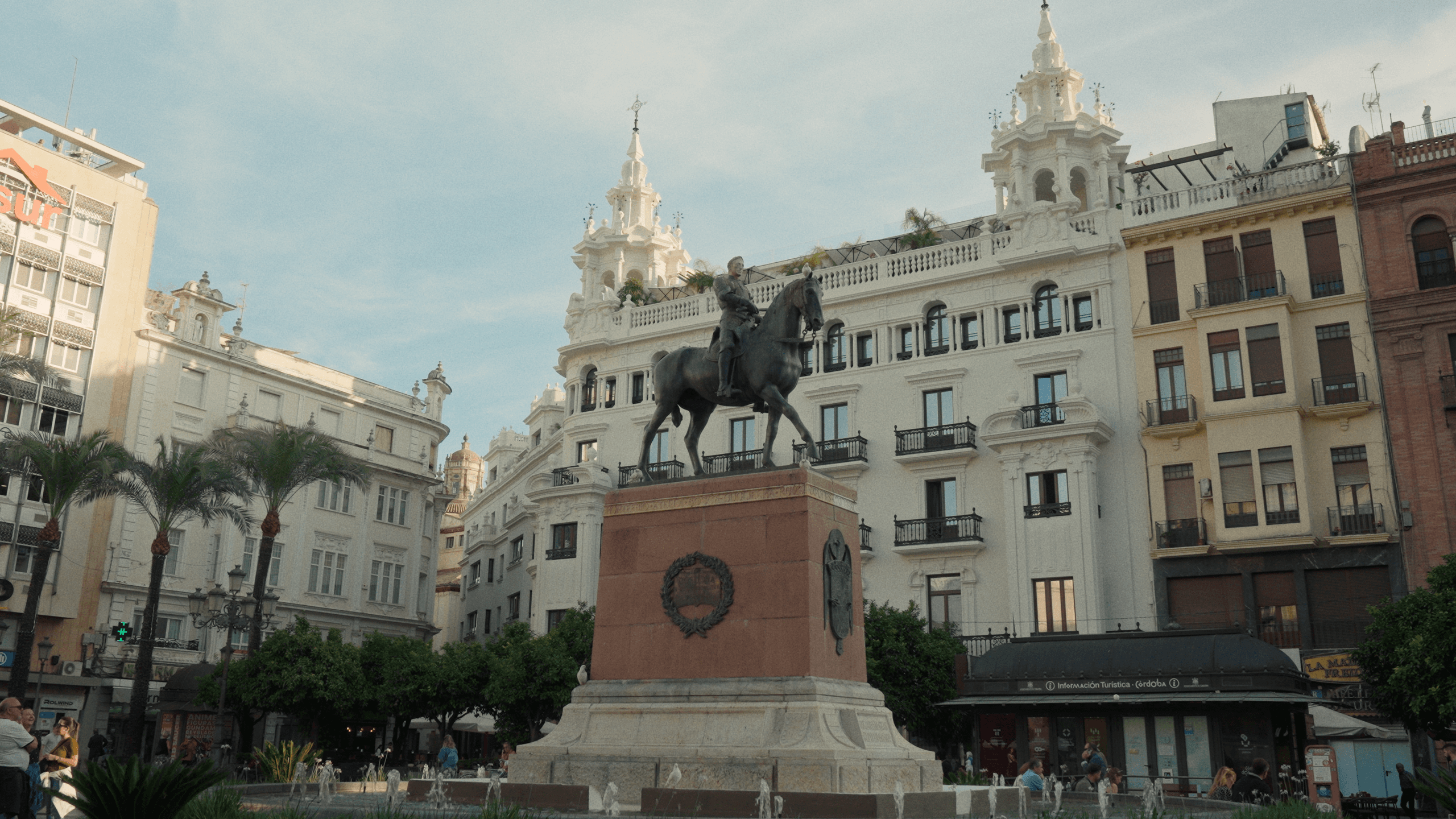
The Santiago district stretches along the Guadalquivir, in the south-east of Córdoba's Centro district, on the strip of the Axerquía closest to the river. It is one of the corners of the historic centre that fewest tourists visit, despite preserving one of the fourteen parishes that Ferdinand III laid out after the conquest of 1236 and being a short walk from the Mosque-Cathedral.
It takes its name from the church of Santiago, built on an 8th-century mosque of the emir Hisham I and the only one, together with San Juan and San Lorenzo, to preserve its original Islamic minaret integrated into the tower. But the district is much more than its church: a fabric of quiet streets, converted palaces and enclosed convents that survives away from the usual tourist circuit.
History of Santiago
After conquering Córdoba in 1236, Ferdinand III divided the city into fourteen parishes and replaced many of the neighbourhood mosques with Christian churches, the so-called Fernandine churches. That of Santiago was built from 1260, under the reign of his son Alfonso X, reusing the old minaret of the mosque of Hisham I, which the architect Hernán Ruiz II integrated in 1555 into the new bell tower.
The district keeps the Convent of Santa Marta, the oldest enclosed monastery in Córdoba, founded on a donation by Catalina López de Morales in 1455 and attached to the Order of Saint Jerome in 1465. Its church, a single nave with ribbed vaults, was built between 1479 and 1511, and the main altarpiece is by the sculptor Andrés de Ocampo, from 1592.
At the end of the district towards Campo Madre de Dios stood the Puerta de Baeza, one of the most striking gates of the Axerquía wall, with two round towers joined by a semicircular arch. It was demolished in November 1868, under a municipal decree of 1858 that authorised the demolition of several gates and stretches of wall in the name of urban progress.
What to see in Santiago
Santiago is best visited unhurriedly, wandering between its church and the stretch of river where the historic mills still turn.
1. Church of Santiago
Gothic-Mudejar on the outside, it keeps inside the minaret of the old mosque of Hisham I, from the 8th century, one of the three preserved in the Fernandine churches of Córdoba together with those of San Juan and San Lorenzo. A fire in 1979 and a later collapse in 1981 forced a restoration that returned the church to worship in 1991.
2. Convent of Santa Marta
On the street of the same name, it is the oldest enclosed convent in the city. It keeps a Renaissance altarpiece of 1592 and the tombs of the first Counts of Cabra, and its discreet façade contrasts with the artistic heritage it hides inside.
3. Casa de las Campanas
On Calle Siete Revueltas, this 15th-century stately home was the residence of Pedro de Montemayor and later housed a bell foundry, from which it takes its name. It keeps a Mudejar courtyard with multifoil arches and today hosts cultural activities.
4. Palace of the Marquises of Benamejí
On Calle Agustín Moreno, this 18th-century palace, reformed in the 19th century by Rafael de Luque, combines elements of different periods and styles. Today it is the seat of the School of Arts and Crafts and its staircase and inner garden can be visited.
5. Molino de Martos
By the river, this flour mill of medieval origin, remodelled in the 14th and 16th centuries, was for centuries the city's main grain mill. Today it houses the Hydraulic Museum, devoted to the traditional use of water in Córdoba.
How to get to Santiago
The district is about ten minutes' walk from the Mosque-Cathedral, following the Ronda de Isasa eastwards along the Guadalquivir. As it is a small district well connected with the rest of the historic centre, it is usually explored on foot.
Santiago is best enjoyed on a leisurely stroll, combined with the stretch of the Guadalquivir from the Molino de Martos towards the Alegría and Enmedio mills. Spring and autumn are the most pleasant seasons for walking by the river, away from the bustle of the Mosque-Cathedral and the Jewish Quarter.
Book your guided tour
Want to discover it with an official guide who explains it to you in person?