Royal Stables of Córdoba, cradle of the Andalusian horse
Written by official guides
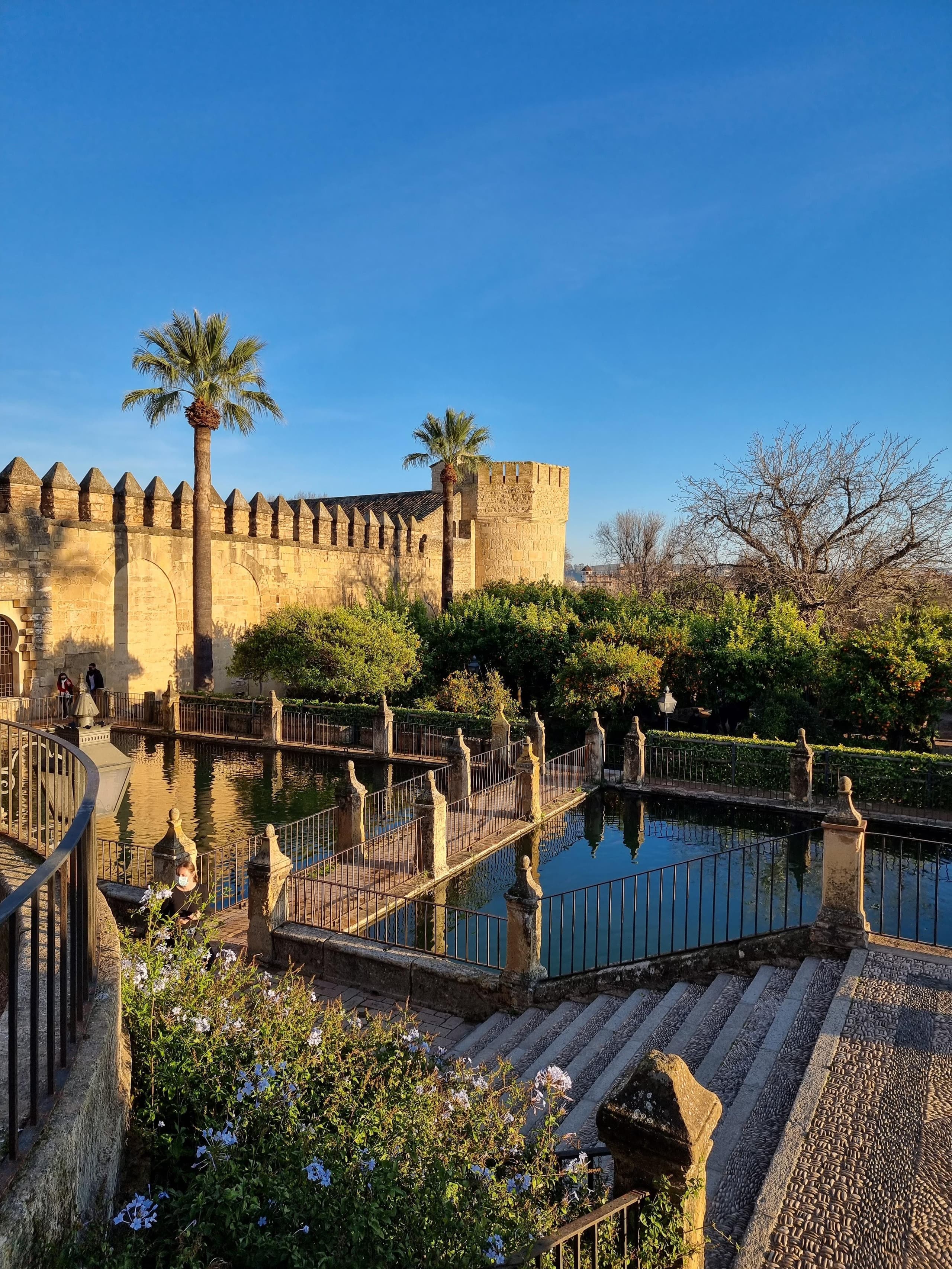
A few metres from the Alcázar of the Christian Monarchs, in the heart of Córdoba's historic centre, the Royal Stables hold almost five centuries of equestrian history. It is not a monument frozen in time: pure Spanish breed horses are still bred here and every week a show is held combining classical dressage and flamenco on the same ground where the royal stallions were trained.
The building was commissioned by the king in the 16th century and since then has been through a fire, more than a century of military use and a restoration that turned it into one of the attractions around the Alcázar. Below: its history, what you can see inside, how much the ticket costs and how to combine the visit with the rest of the monumental area.
They stand next to the Alcázar of the Christian Monarchs, at Calle Caballerizas Reales, 1, beside the San Basilio district. Today you can visit spaces such as the main stable, the stallion stables and the riding arena, and the building hosts the equestrian show Passion and Duende of the Andalusian Horse.
History of the Royal Stables
Philip II founded the Royal Stables in 1572 with the aim of breeding quality horses for the Royal Household. He entrusted the project to Diego López de Haro, Master of the Horse, who built the stables next to the Alcázar of the Christian Monarchs, on land that had previously been part of its gardens. From that selective breeding the pure Spanish breed horse, also called the Andalusian horse, was born.
In 1734 a fire destroyed much of the original building. Reconstruction did not come until the mid-18th century, under the reign of Ferdinand VI, and respected the initial design except for the coat of arms of Charles III that crowns the main entrance today. Between 1842 and 1995 the complex ceased to be a royal stable and became a military barracks, home to the Seventh Stallion Depot, with more than a hundred Arab and Andalusian horses for draught and breeding.
In 1929 the Royal Stables were declared a National Historic Monument. Since December 2021 they have been owned by Córdoba City Council, after being expropriated from the Ministry of Defence for 5.2 million euros; the show has been run by the Córdoba Ecuestre association since 2010. Today the same building that Philip II had built for his horses still breeds pure Spanish breed horses and hosts every week the show "Passion and Duende of the Andalusian Horse", linking the equestrian tradition with flamenco in the very space where the royal stallions were trained.
What to see in the Royal Stables
Courtyard and main façade
The main façade keeps the coat of arms of Charles III, placed after the 18th-century reconstruction. The entrance courtyard, with its original 16th-century layout, is the first space you walk through both on the training visit and before the equestrian show, and from it you can already sense the direct connection with the Alcázar gardens, separated only by a wall.
Stables and pure Spanish breed horses
The main stable is the most impressive piece: three naves with brick arches and stone columns supporting barrel vaults, with the mangers on either side. It is known as the "cathedral for horses" for its proportions and the effect of the vaults over the rows of columns. The training visit lets you see the pure Spanish breed horses, the stallion stable and the riding arena up close, without needing to buy a ticket for the evening show.
Equestrian show
The show "Passion and Duende of the Andalusian Horse" is a different experience and requires a separate ticket. It combines cowboy dressage, haute école, work in hand and garrocha with flamenco music, in a performance of approximately 60 minutes on the arena of the main stable. This ticket does include prior access to the courtyard and the arenas, where the horses wait before going on stage; the basic training-visit ticket, on the other hand, does not give access to the evening show.
Opening hours, tickets and prices
The Royal Stables offer two types of visit with different prices, so it is worth being clear about which one you want before buying a ticket.
Training visit (without show): €5 per person, €1 for children aged 3 to 12, free for those born in Córdoba and its province. Approximate hours Wednesday to Saturday, mornings from 10:00 to 13:00/13:30 and afternoons from 16:00/17:30 to 18:30/20:30.
Equestrian show "Passion and Duende of the Andalusian Horse": performances Wednesday to Saturday, lasting approximately 60 minutes. The price is around €17-18 for adults and €12-14 for children, although the exact figure varies by date and seat type.
Address: Calle Caballerizas Reales, 1, 14004 Córdoba.
Before booking it is worth confirming the current timetable on the Córdoba Ecuestre website or by calling 957 497 843, as it changes with the season.
How to get there
The Royal Stables are in the heart of the historic centre, on the street that bears their name, right next to the Alcázar of the Christian Monarchs: only a wall separates them. From the Mosque-Cathedral it is a few minutes' walk, following Calle Cardenal Herrero and heading down towards the river.
The most logical combination is to visit the Alcázar of the Christian Monarchs first, with its gardens and towers, and then continue to the Royal Stables, as they share the same surroundings and are a step from each other. From there, strolling along the river or crossing the Roman Bridge, you easily link up with the rest of the monumental area.
If you want to see the Royal Stables as part of a wider route around the Alcázar, the complete tour of the monumental area of Córdoba includes the visit to the Baths of the Caliphal Alcázar, just a few minutes from here, lasting about 45 minutes for that part of the route alone.
It is the most convenient way to link the monuments of this area without wasting time looking up separate timetables, with a guide who explains the history of each corner as you walk between them.
If you want to make the most of your visit to the Royal Stables of Córdoba, several guided visits fit very well by location and timing. You can combine it with a guided visit to the Mosque-Cathedral or choose a mixed route such as the complete tour of Córdoba with tickets.
For a different plan, there is the guided visit to Medina Azahara and the Medina Azahara by night.
If you want to get to know it with more context, the best way is to book our guided visits in Córdoba and the guided visit to the Alcázar of the Christian Monarchs with an official guide.
Book your guided tour
Want to discover it with an official guide who explains it to you in person?