Church of San Pablo, the Fernandine church with the Mudejar doorway
Written by official guides
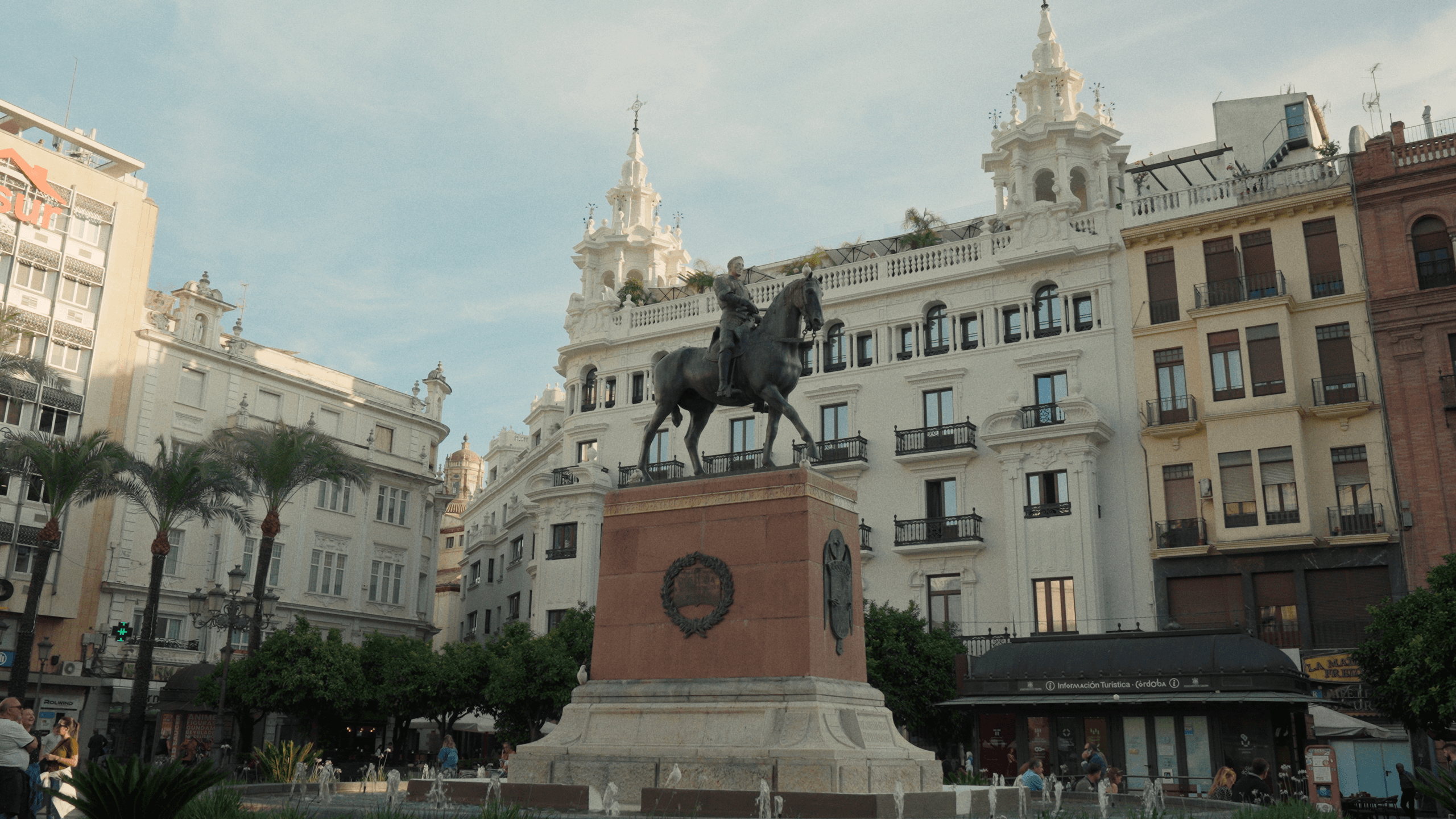
The Church of San Pablo is one of the fourteen Fernandine churches of Córdoba, built after the Christian conquest of the city in the 13th century. It stands in the heart of the historic centre, opposite the Town Hall, and combines in a single building Gothic, Mudejar and Baroque elements layered over seven centuries.
Outside, it stands out for its two doorways, the Mannerist one from the 16th century and the Baroque one with Solomonic columns on Calle Capitulares. Inside, it holds an old Gothic-Mudejar door, wooden coffered ceilings and several chapels still used for worship and Holy Week.
History of the Church of San Pablo
Ferdinand III donated the site to the Dominicans in 1237, ratified by royal privilege in 1241, after the conquest of Córdoba in 1236, as one of the fourteen Fernandine churches among which the new Christian city was divided between parishes in the centre and convents of the mendicant orders. San Pablo was born linked to the Order of Saint Dominic, which established its convent here and gave the church its name. The works on the current building took place between the late 13th century and the 14th century, on a site previously occupied, according to archaeological studies, by an Almohad-period building.
During the 16th century the church received a new Mannerist-style façade, by the architect Juan de Ochoa, with two levels and the figures of Faith and Hope. In 1706 the Baroque marble doorway on Calle Capitulares was added, with Solomonic columns, by the stonemasons Andrés del Pino and Bartolomé de Rojas, giving access to the convent's former forecourt.
The Dominican convent that surrounded the church did not survive the 19th century: it served as a barracks during the French occupation and ended up demolished in 1848 because of its poor condition. The church itself underwent a major restoration at the beginning of the 20th century, directed by Adolfo Castiñeyra and Mateo Inurria, which removed much of the Baroque decoration added in previous centuries and recovered the church's medieval appearance. Since 1904 the parish has been entrusted to the Claretian fathers, and the building was declared an Asset of Cultural Interest on 3 June 1931.
What to see in the Church of San Pablo
San Pablo can be covered in a short time, but it concentrates in a few metres several of the most characteristic elements of the Fernandine churches of Córdoba. These are the four stops not to skip.
The Mudejar doorway
In the Epistle nave an old Gothic-Mudejar door is preserved, today converted into the entrance to one of the chapels, recalling the church's medieval origin before the Mannerist and Baroque reforms of later centuries. Together with the wooden coffered ceilings of the three naves, it is the clearest testimony of the work of Mudejar master builders in the construction of the church. In the Gospel nave another door opens, with a pointed ogival arch, connecting directly with Calle San Pablo.
The Camarín and the Chapel of Nuestra Señora del Rosario
The Chapel of Nuestra Señora del Rosario, octagonal in plan, was built at the beginning of the 15th century as the funerary chapel of Martín López de Córdoba. In the 18th century it was completely transformed with the construction of a marble altarpiece and a Baroque camarín, the ensemble seen today. It is one of the richest pieces inside the church and reflects the weight of Rosary devotion in the parish, promoted in the 17th century by the Cordoban Dominican Francisco de Posadas.
Chapel of La Expiración
The Chapel of La Expiración was rebuilt at the beginning of the 20th century and houses the image of the Cristo de la Expiración, carved around 1612. This chapel is the canonical seat of the Brotherhood of La Expiración, one of the two brotherhoods currently based in the parish together with the Filial Brotherhood of Nuestra Señora del Rocío.
The High Altar and the Epistle apse
The chancel of the church is resolved in three apses: the central one, pentagonal in plan and covered with a ribbed vault, holds the main altarpiece; the two side ones are circular inside and rectangular outside, a common solution in Cordoban Fernandine churches. The Epistle apse preserves part of the original 13th- and 14th-century fabric, with fewer later interventions than the rest of the church.
Opening hours and tickets
San Pablo is an active parish and entry is free. The usual weekday opening hours are 10:00 to 19:30, extended to 20:30 from July to September; on Sundays and public holidays the church also opens in the morning, with several masses between 10:00 and 13:45 in addition to the afternoon celebrations. As these are worship hours, it is worth confirming them before your visit, as they may vary on special dates.
The church's activity is strongly marked by Holy Week: the Brotherhood of La Expiración processes from this church, which was also home, between the 1960s and 2014, to the historic image of the Virgen de las Angustias by Juan de Mesa, later moved to the church of San Agustín. Those who visit San Pablo outside religious services will find the church in silence, but it is worth keeping the worship times in mind if you want to explore the interior at leisure.
How to get there
The Church of San Pablo is at Calle Capitulares, 18, right opposite Córdoba Town Hall and a step from Plaza de la Corredera, on the boundary between the Villa and Axerquía districts. It is a natural stop for those walking the historic centre eastwards from the Mosque area, on the same route that connects with other Fernandine churches such as San Andrés or Santa Marina.
Being outside the immediate surroundings of the Mosque-Cathedral, many visitors skip it without realising, although it is barely ten minutes' walk from the monumental centre. The best way not to miss it, together with the rest of the historic centre, is to see it within a wider guided route.
If you want to discover San Pablo within a wider route through Córdoba's historic centre, the Free Tour of Córdoba is the most flexible option: it lasts about 2 hours, is free and is paid with a voluntary tip of 10 to 15 euros per person at the end of the visit.
A local guide walks the streets of the historic centre with you, with stops at the city's key points, and gives the context needed to understand why buildings like San Pablo are part of Córdoba's Fernandine heritage.
Book your guided tour
Want to discover it with an official guide who explains it to you in person?