Visit the Puerta del Puente of Córdoba and discover its history
Written by official guides
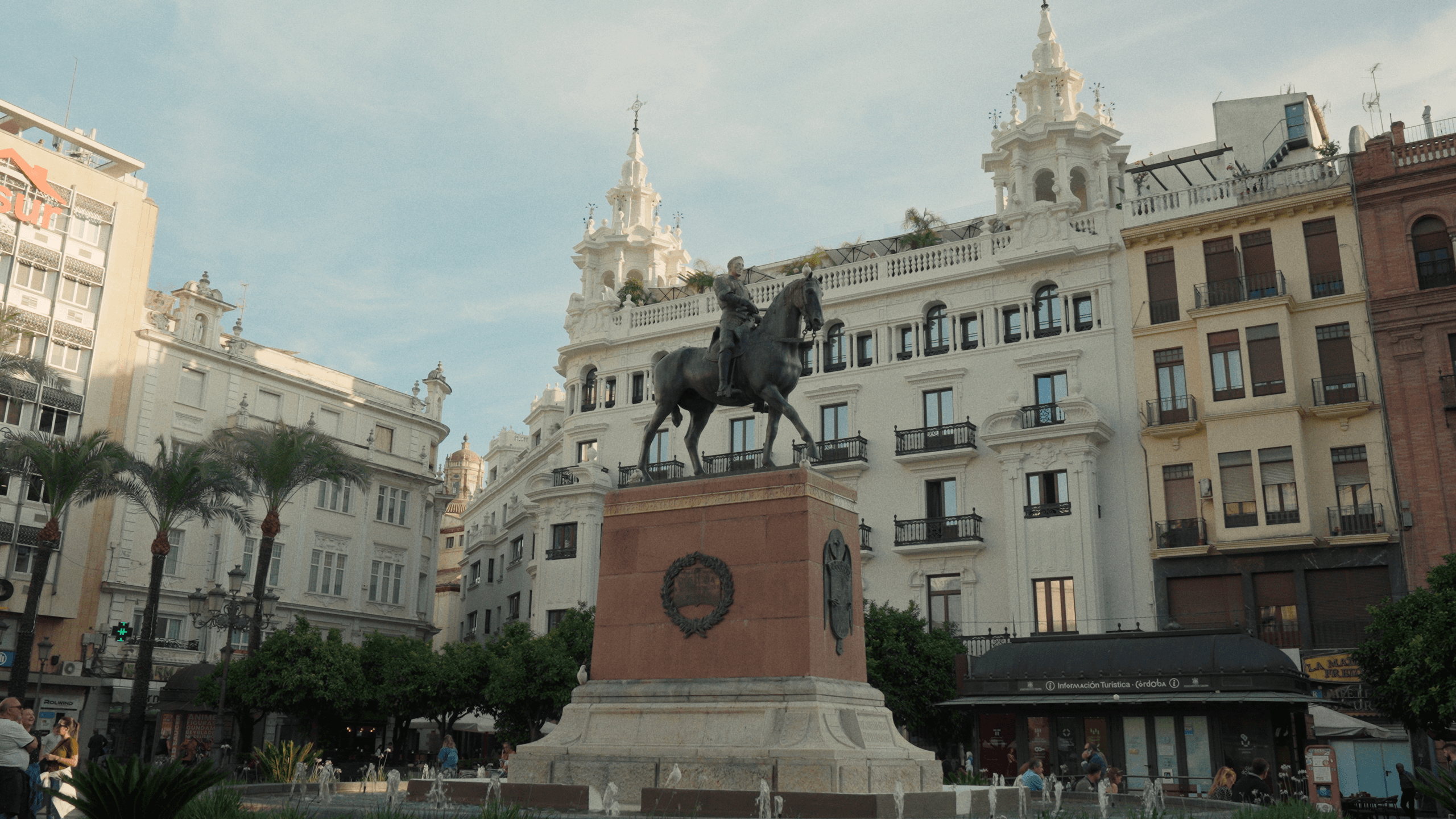
The Puerta del Puente of Córdoba stands in Plaza del Triunfo, between the Roman Bridge and the Mosque-Cathedral. It was born as part of the Roman wall, and today it looks like a monumental Renaissance gate, with that air of a classical arch that marks the clearest entrance to the historic centre of Córdoba at this point.
Its history explains why it is so important. The original gate was created in the mid-1st century because of its proximity to the Baetis and to the crossing of the Via Augusta, and in the Islamic period it was a key piece for the protection it gave to the Mosque and the Andalusi Alcázar. Its current image dates from the 16th century, when Hernán Ruiz III remodelled it for the visit of Philip II, even leaving an inscription referring to 1570, and since 1931 it has been listed as an Asset of Cultural Interest together with the Roman Bridge and the Calahorra Tower.
Discover the Puerta del Puente in Córdoba
The original gate was part of the Roman wall, created possibly between the reigns of Tiberius and Claudius in the mid-1st century, because of its proximity to the Baetis river and to the bridge carrying the Via Augusta. In the Islamic period its importance grew because of the protection it gave to the Mosque and the Andalusi Alcázar, and it had several names: Bab al-Yazira (Gate of Algeciras), Bab al-Wadi (Gate of the River) or Bab al-Sura (Gate of the Statue), although the best known is Bab al-Qantara, today's Puerta del Puente (Gate of the Bridge).
The structure we see today is a 16th-century Renaissance monument, the work of Hernán Ruiz III, who carried out a major remodelling for the visit of Philip II. The Puerta del Puente rises on high bases with fluted Doric columns supporting a classical entablature with triglyphs and metopes, and above the lintel an inscription was placed referring to the monarch's visit in 1570. That reform transformed it from a defensive gate into a symbol of Córdoba's strength, like a Roman-style triumphal gate.
Since 1931, the gate, together with the Roman Bridge and the Calahorra Tower, has been listed as an Asset of Cultural Interest and belongs to the historic centre of Córdoba declared a World Heritage Site. In the 20th century, in 1912 (under Alfonso XIII) the area was stripped of its walls; in 1928 mayor José Sanz Noguer had the inner side built imitating the front, repeating the forms but without decoration or inscriptions, which is why many mistakenly call it the triumphal arch. In the late 1950s the ground level was lowered to recover the original floor level, and its current appearance is also explained by the early 20th-century reforms, when the attached buildings were demolished and it was left as a free-standing monument. More recently, in December 2025, its viewpoint reopened for visits.
Puerta del Puente Córdoba opening hours and when you can visit the inside
It can be seen from outside 24 hours a day, seven days a week, because it is a public monument and the outer passage never closes. It is in Plaza del Triunfo and, being between the Roman Bridge and the Mosque-Cathedral, it is impossible not to cross or walk around it if you are in this area.
What varies is the part that can be visited inside, which includes historical exhibitions and a viewpoint on the terrace. That area has recently reopened and its hours may vary by season, weekends, public holidays or special events, so it is best to check the Córdoba Tourism website before going.
Puerta del Puente tickets and price, viewpoint and exhibitions
General access to the Puerta del Puente in Córdoba is free. You can pass under the arch and see the monument from outside without buying a ticket, because it is a public passage in Plaza del Triunfo.
The question is the inside, when the historical exhibitions and the terrace viewpoint are open to the public. The information we have suggests it may be free, but it is also advisable to check whether there is a token charge for the upkeep of the exhibition area.
What to see at the Puerta del Puente, the viewpoint and Plaza del Triunfo
If you stop at the Puerta del Puente, do it with intent. Here you are not just in front of a gate: you are in Plaza del Triunfo, with the Roman Bridge on one side, the Mosque-Cathedral on the other and the Guadalquivir right in front. These are the five essentials.
1. The Renaissance structure itself
Note its design as a triumphal arch, conceived to commemorate a possible royal visit, and not merely as a defensive gate in the wall.
2. The viewpoint
If the interior is open, go up to the viewpoint to enjoy views of the Guadalquivir river, the Roman Bridge and the Mosque-Cathedral from the top of the gate.
3. Integration with the wall
Observe how it was originally integrated into the city's defensive system, before the attached houses were demolished at the beginning of the 20th century.
4. The adjacent Triumph of Saint Raphael
Right next to it is one of the "triumphs" dedicated to the Archangel Raphael, guardian of the city. It is a natural stop in Plaza del Triunfo.
5. The night lighting
At night, the artificial lighting highlights the gate and completely changes the feel of the place, with a visual experience different from the daytime one.
Gate of Algeciras and other names: Bab al-Qantara, Bab al-Wadi and Bab al-Sura
In the Islamic period, the Puerta del Puente was not known by a single name. Locally it was referred to as Bab al-Qantara (Gate of the Bridge), the name that has survived to this day and the most recognisable.
But it also appears cited as Bab al-Wadi (Gate of the River), for its direct relationship with the Guadalquivir, as Bab al-Sura (Gate of the Statue), and as Bab al-Yazira, that is, the Gate of Algeciras. That variety of names makes clear the weight this entrance had within Andalusi Córdoba, both for its position and for its meaning.
How to get to the Puerta del Puente in Córdoba
The Puerta del Puente is in a central, pedestrian area, in Plaza del Triunfo, so the usual way to get there is on foot from the historic centre. From the Jewish Quarter or the Mosque-Cathedral it is a very short walk, and if you come from the other side of the river, you just have to cross the Roman Bridge and the gate appears right at the end.
If you prefer public transport, bus lines 3 and 12 stop at Puerta del Puente. And if you come by car, the nearest public car park is Parking del Alcázar, from where you walk in a few minutes.
Guided visit to complete the Puerta del Puente and the Mosque of Córdoba
The Puerta del Puente is a step from the Mosque-Cathedral, so the most logical thing is to use the area for a guided visit and understand the whole complex. If you want to go inside the city's most important monument, there is our guided visit to the Mosque-Cathedral, lasting 1 hour and 15 minutes from €28.
And if you prefer a calmer pace, there is also the guided visit to the Mosque of Córdoba (small group), with a maximum of 12 people, the same length (1 hour and 15 minutes) from €36.
Guided visit to the Mosque-Cathedral of Córdoba from the Puerta del Puente
After seeing the Puerta del Puente, it is easy to complete the visit because you are a step from the Mosque-Cathedral of Córdoba. If you want to go inside, ours costs €28 with tickets included and lasts 1 hour and 15 minutes, with an official guide authorised by the Cathedral Chapter.
At the end you also receive free tickets for the Fernandine Churches.
Book your guided tour
Want to discover it with an official guide who explains it to you in person?